What Are Synthetic Populations?
People are one of the most significant factors to consider when assessing future challenges, risks, and investments, and they are also the most complex.

People are one of the most significant factors to consider when assessing future challenges, risks, and investments, and they are also the most complex.
People are unique, unpredictable, and challenging to recreate with traditional modelling approaches. By combining diverse sources of aggregated data with advanced modeling techniques such as integrated population models and agent-based modeling, RWI solves this complexity and brings rich simulated environments to life.
Each synthetic person is never-identified and geo-tagged, with attributes that reflect demographics, health, behaviors, patterns of life, psychographics, preferences and more, all generated using publicly available and ethically sourced data sets.
We overcome limitations in traditional data collection — including bias, gaps, and oversight — so that populations often labeled as “invisible” can be represented, analyzed, and included. Our synthetic populations provide the insight decision-makers need to assess impact, model outcomes, and prepare for future scenarios across sectors.

Generating a Synthetic Population is a multi-layered process involving a significant number of converged data points. The creation of a Synthetic Population begins with research, which utilizes census data, additional open-source data, and a variety of other published research, community, and non-traditional data sources.

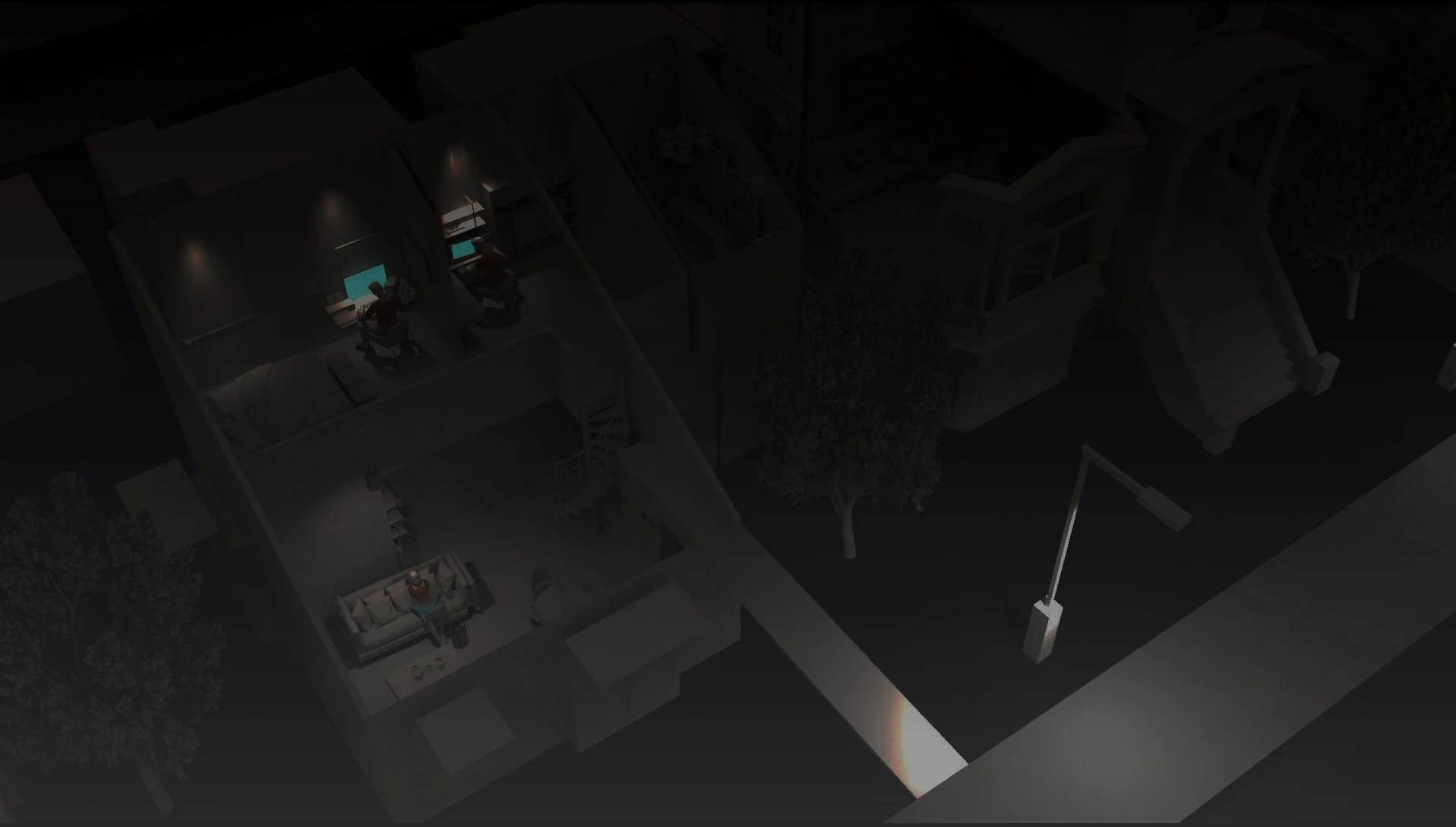
Synthetic Populations need to live somewhere; Synthetic Residences are the perfect place. Our technology generates high-fidelity digital twin models of housing today and sandboxable housing twins of any tomorrow.
We create Synthetic Populations without relying on privacy-protected information or historical data that is missing, irrelevant or inaccurate.
Representative, never-identified Synthetic Populations demonstrate intersectional impacts and protect privacy. We focus on positive impacts for people and planet, ensuring no one is left behind.

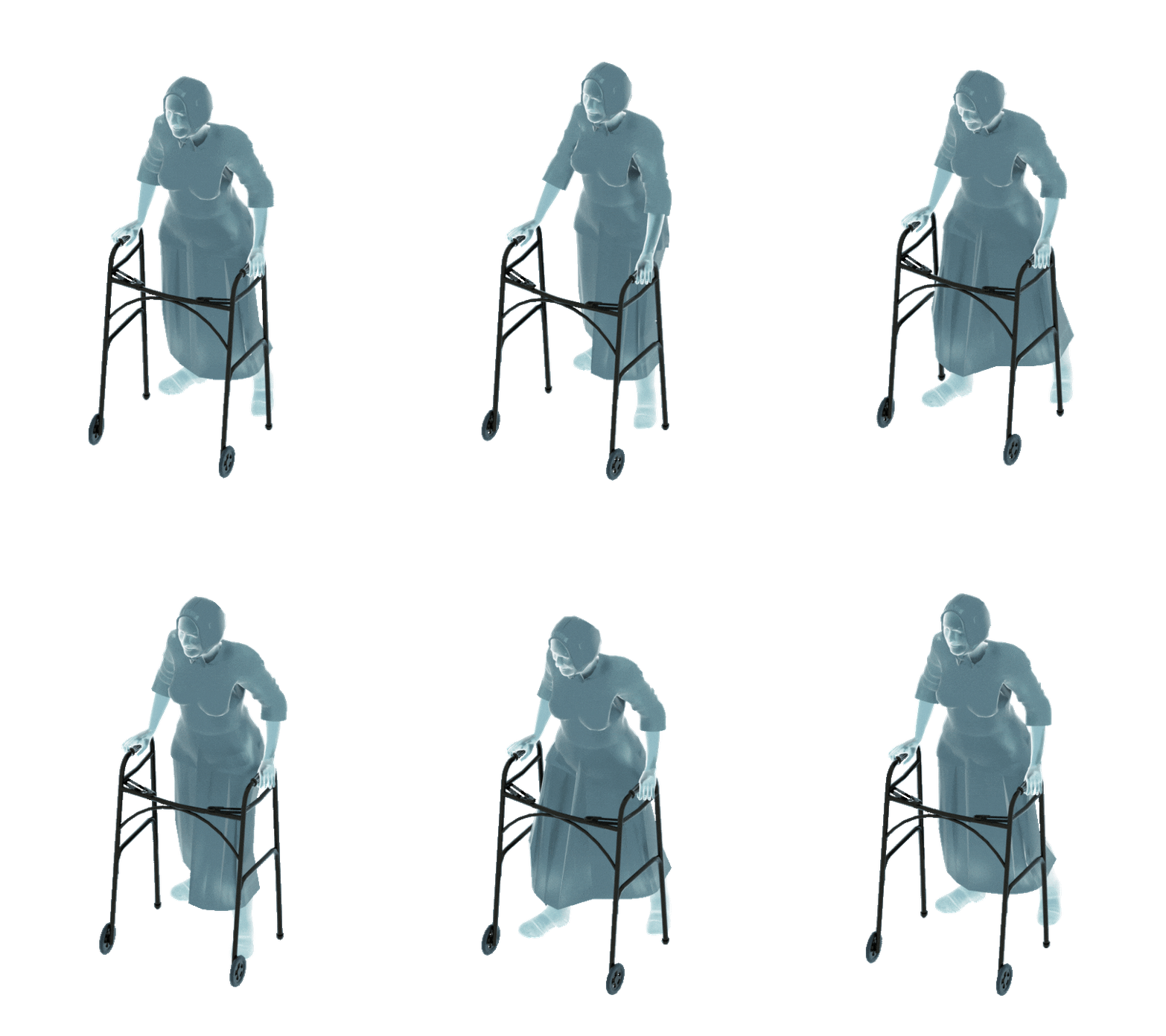


Our innovative Synthetic Notation Language and 6D platform allow us to build entities capable of emergent behaviour through the interaction of synthetic individuals and their environment. These outcomes arise from the combination of agent-based modeling, demographic modeling, and predictive population modeling to visualize, scenario-build, and forecast in areas such as mobility, social dynamics, energy use, health systems, policy impact, technology adoption and more.
Synthetic populations and their emergent behaviours allow an unprecedented ability to visualize, query, and forecast cause and effect. Decision-makers around the world utilize RWI’s Synthetic Populations and Synthetic Twin technologies to plan emergency egress routes in the face of natural disasters, forecast the future of household electrification, assist the strategic planning of social infrastructure, and enhance and quantify youth's sense of belonging.