
USE CASES
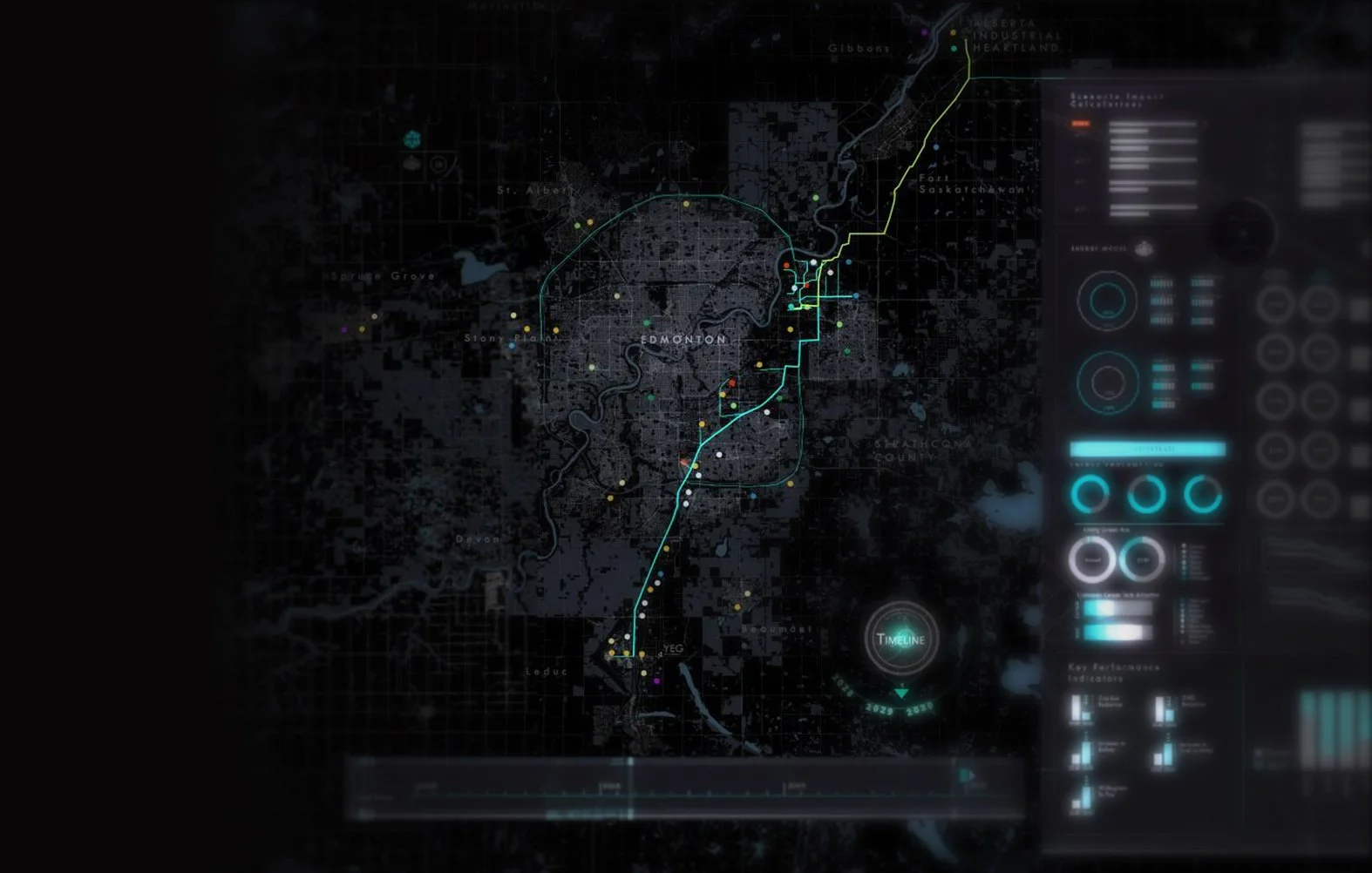
Supporting Interconnected Regional Development
RWI’s award-winning synthetic twin of the Edmonton Metropolitan Region optimizes and builds consensus around the impact and outcomes of investment, policy, and resource allocation.
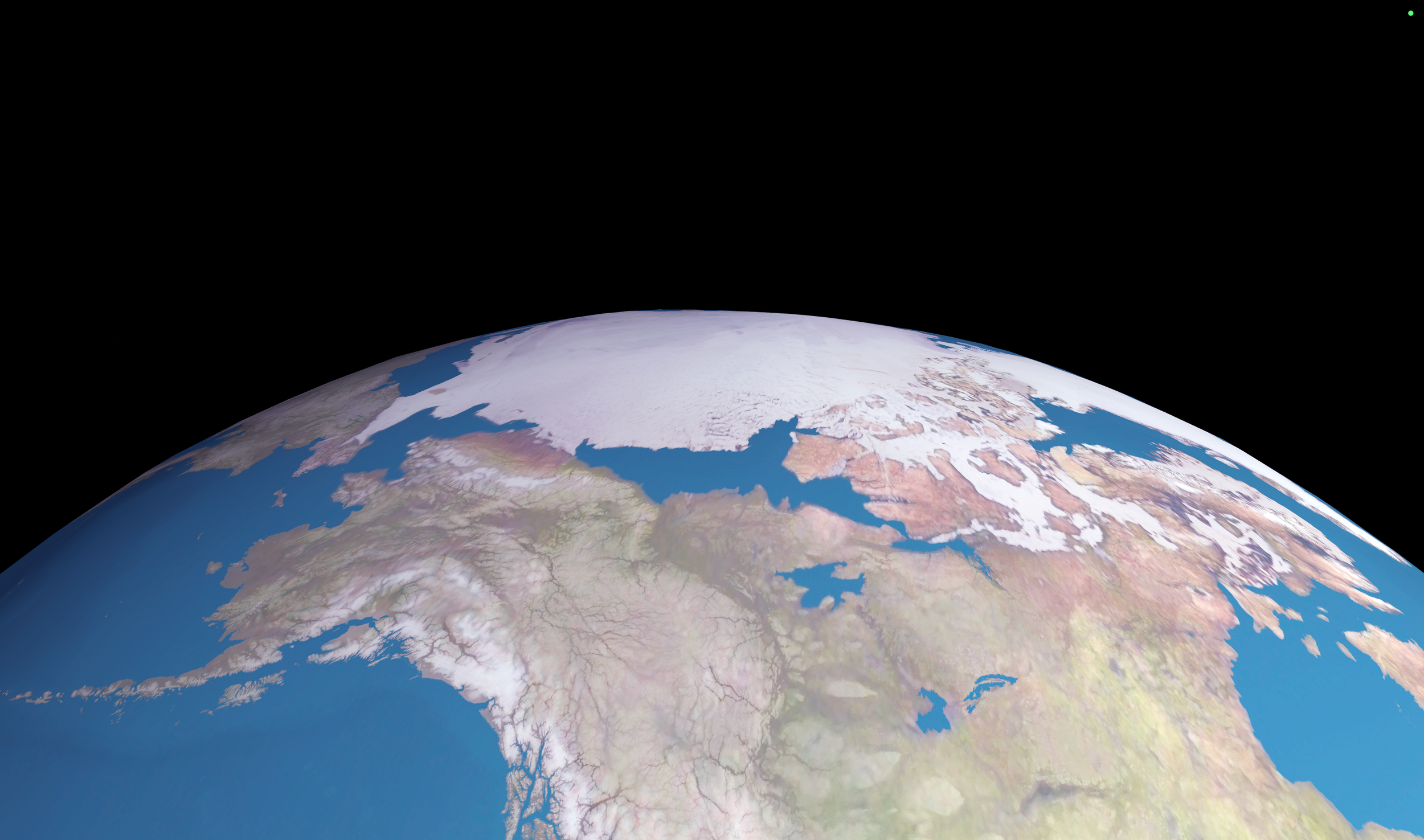
Creating the Synthetic North
Complex problems in the north require hyper-local insights and tailored solutions as Arctic and sub-Arctic investments accelerate. RWI responded by creating Synthetic North, a 1.35 million mi² high-fidelity Synthetic Twin with 15 million data points to support strategic decision-making.

Establishing Social Infrastructure
There are few established tools for planning sustainable, resilient social infrastructure, despite communities increasingly requiring valuable, data-driven insights for long-term service strategies. RWI Synthetics addressed this by creating benchmarks from international best practices and running five future-focused sandbox scenarios for a client community.

Forecasting Electrification in Calgary
New grid load dynamics challenge traditional forecasting, prompting utilities like ENMAX Power to rethink existing processes. We addressed this by creating a 6D Synthetic Twin of Calgary that forecasts 2050 electrification demand with inflectable scenarios.

Synthesizing Wildfire Evacuations
In Western Canada, rising urban-wildfire interactions prompt emergency responders to identify infrastructure and policy risks, and RWI’s Synthetic Intelligence helps municipalities find the most efficient, cost-effective, and human-focused evacuation options.

High-Fidelity Infrastructure Forecasting
Amid housing crises and rapid population growth, RWI used Synthetic Twin intelligence to forecast, sandbox, and produce a high-fidelity estimate of the full annual infrastructure and service costs for a large municipal development at full build-out.

Simulating Extreme Cold in Nashville
In a pilot with the Tennessee Valley Authority, we simulated an extreme cold snap and power outage in Nashville to show grid impacts and community vulnerabilities, particularly in lower-income neighborhoods.
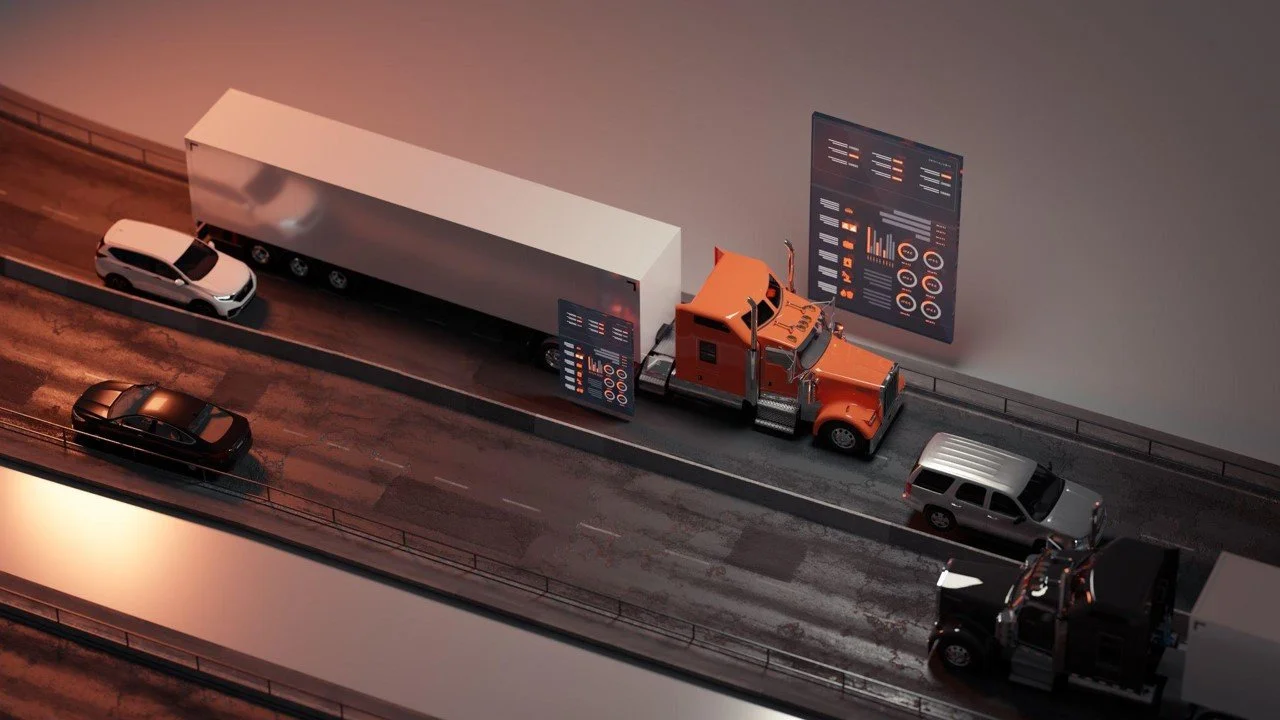
Analyzing Logistics in Edmonton
By analyzing existing infrastructure, costs, cargo, and revenues, RWI used Synthetic Twins to identify growth barriers and simulate future GDP and carbon outcomes, enabling high-fidelity ROI and ROIC estimates for infrastructure, workforce, land, and logistics investments in the Edmonton region.

Transitioning to Hydrogen in Alberta
We supported the transition to a hydrogen economy by developing a Synthetic Twin set in the hydrogen-powered Alberta of 2030, creating a comprehensive, risk-informed framework to guide standardized provincial training and certification for the hydrogen workforce.
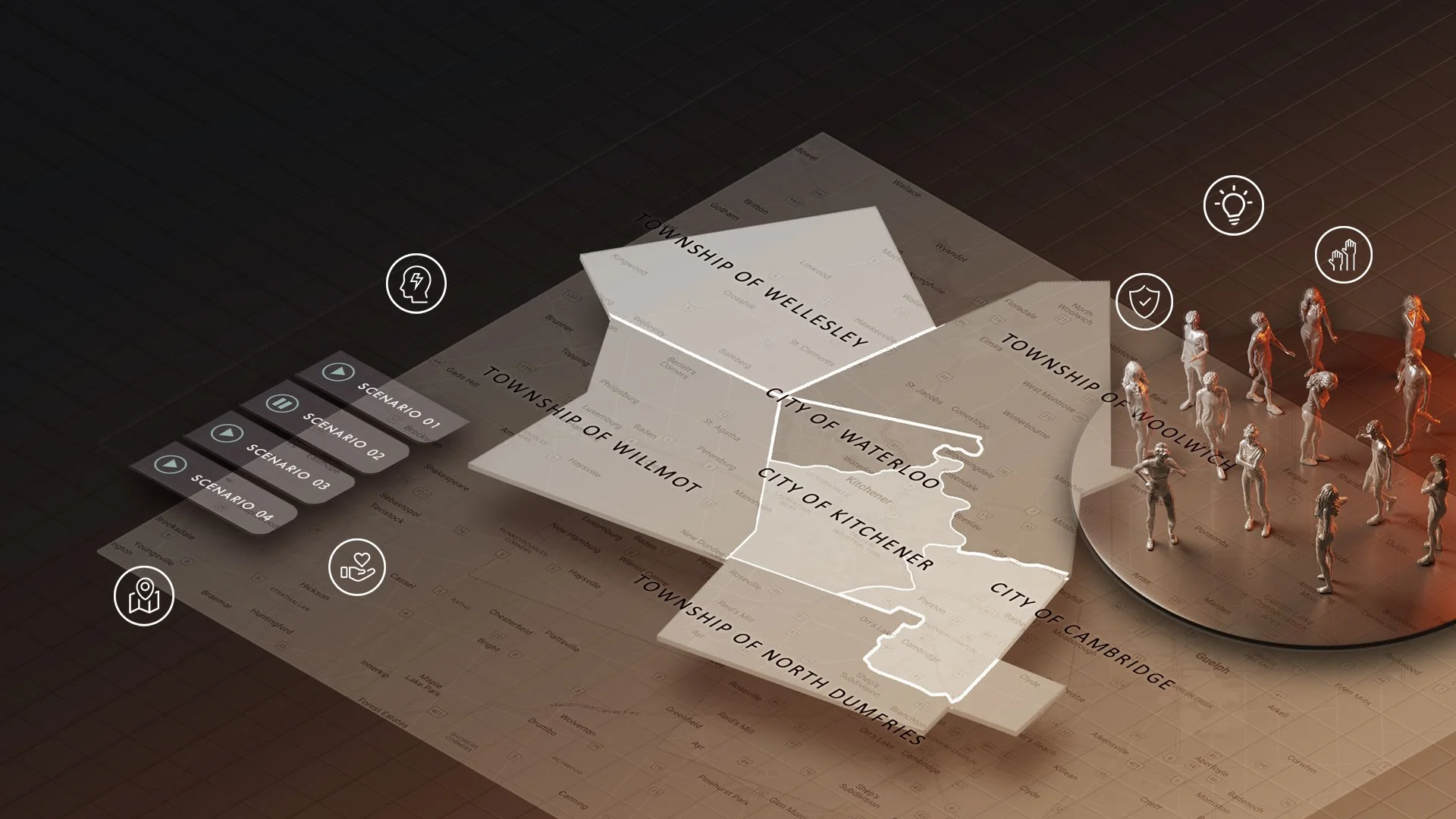
Youth Belonging
Youth sense of belonging is challenging to quantify, but it’s also a key indicator of a community’s connectedness and social health. Improved belonging can facilitate everything from classroom attendance in the present to increasing economic growth in the future. Planning and social services can utilize Synthetic Twins and Populations to test, forecast, and sandbox the various measures that can improve youth’s sense of belonging.
Publications, Including IEEE

IBM Resilience in Action
November 2024, Preparing governments for future shocks - Case Study: Simulating resilience
How Synthetic Nashville is redefining energy security in the face of climate threats.
Myrna Bittner

Applied Energy
How Microgrids can act as a promising solution to the significant challenges to power systems posed by natural disasters.
Wenlong Shi, Hao Liang, Myrna Bittner

IEEE Transactions on Industrial Informatics
May 2024, Data-Driven Resilience Enhancement for Power Distribution Systems Against Multishocks of Earthquakes
Earthquakes can significantly damage power distribution systems. This article looks at how investment in prepositioned mobile emergency generators can be used as an adaptation.
Wenlong Shi, Hao Liang, Myrna Bittner

TVA Connected Communities Pilot Projects
April 2024, Synthetic Resiliency Modeling on Extended Power Outages
RUNWITHIT Synthetics (RWI), in collaboration with EPRI, is applying synthetic modeling to forecast human impacts to enhanced community response planning. This helps the City of Nashville and Nashville Electric Service (NES) assess the outcomes of a widespread outage, particularly on vulnerable populations, and the benefits of potential distributed energy resource (DER) deployments.

IEEE Transactions on Industrial Informatics
January 2024, Stochastic Sequential Restoration for Resilient Cyber-Physical Power Distribution Systems
As modern power systems undergo paradigm shifts, proposed sequential restoration schemes for cyber-physical power distribution should consider resilience better.
Wenlong Shi, Hao Liang, Myrna Bittner

2023 IEEE Canadian Conference on Electrical and Computer Engineering
September 2023, Multi-Timescale Stochastic Electrical and Thermal Energy Management for Sustainable Communities with Wastewater Treatment Plants
Wenlong Shi, Hao Liang, Myrna Bittner

IEEE Transactions on Sustainable Energy
Earthquakes can cause severe damage to electrical infrastructure, and this paper studies the stochastic planning of resilient power distribution systems (PDSs) against earthquakes.
Wenlong Shi, Hao Liang, Myrna Bittner

IEEE Access
The challenges associated with natural disasters during health pandemics are well-documented, and this article extensively discusses impact assessment methods of natural disasters and human activity on power grid smart distribution systems.
Wenlong Shi, Hao Liang, Myrna Bittner