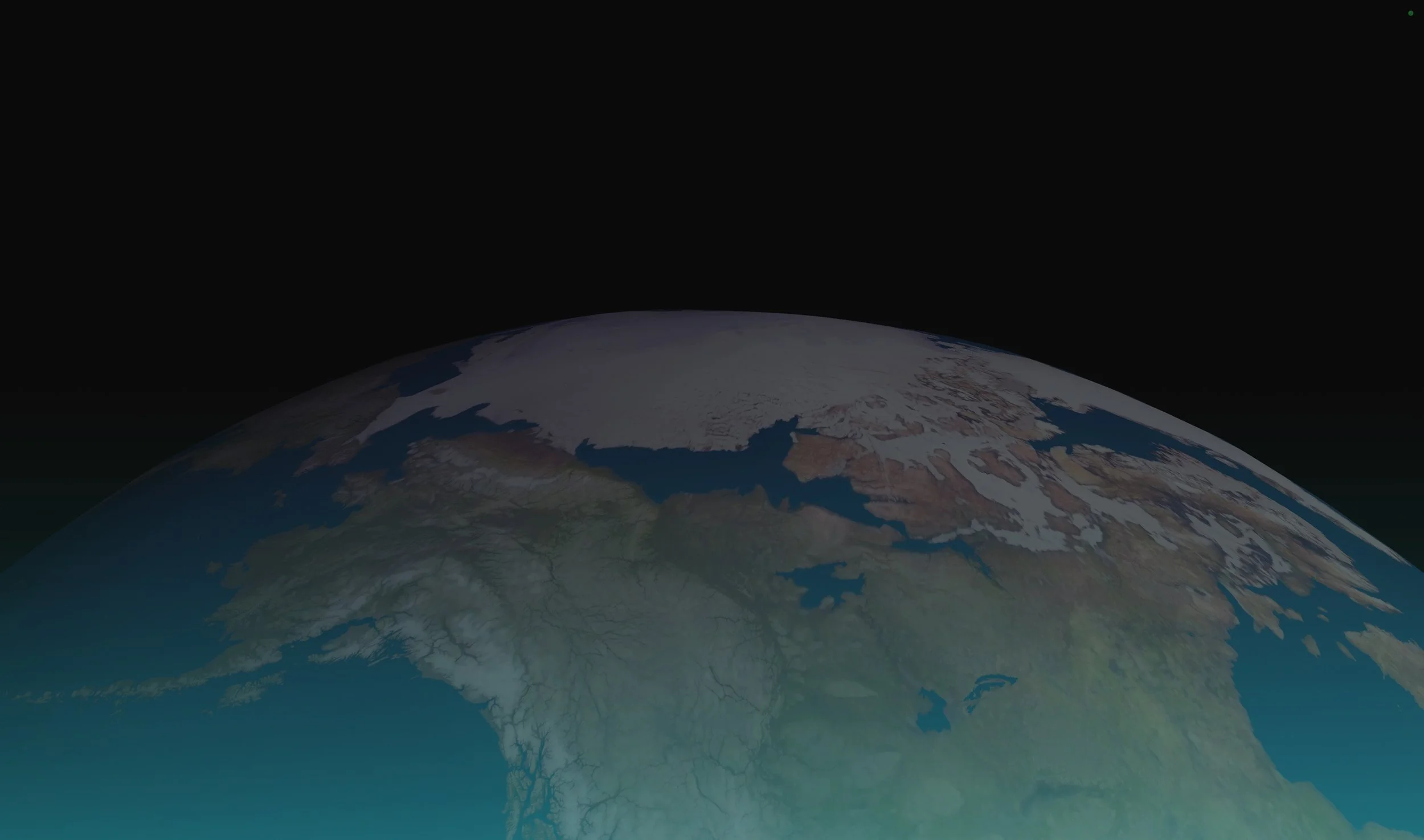
Welcome to Synthetic Earth
Dynamically augmenting futures intelligence for decision-makers locally and globally.

Dynamically augmenting futures intelligence for decision-makers locally and globally.

Welcome to RWI’s most ambitious twin to date: a living, agentic AI and data model of our home called Synthetic Earth.
Synthetic Earth is a 6D visualization platform that brings people, place, and time together in inflectable simulations, allowing decision-makers to explore future scenarios through dynamic, accessible, and immersive experiences.
Through the convergence of research and diverse data sources — including billions of generated data points and non-traditional data sources such as localized knowledge, images, and even sound — RWI has synthesized data from over 50 million people and 200 cities, now accessible in Synthetic Earth.

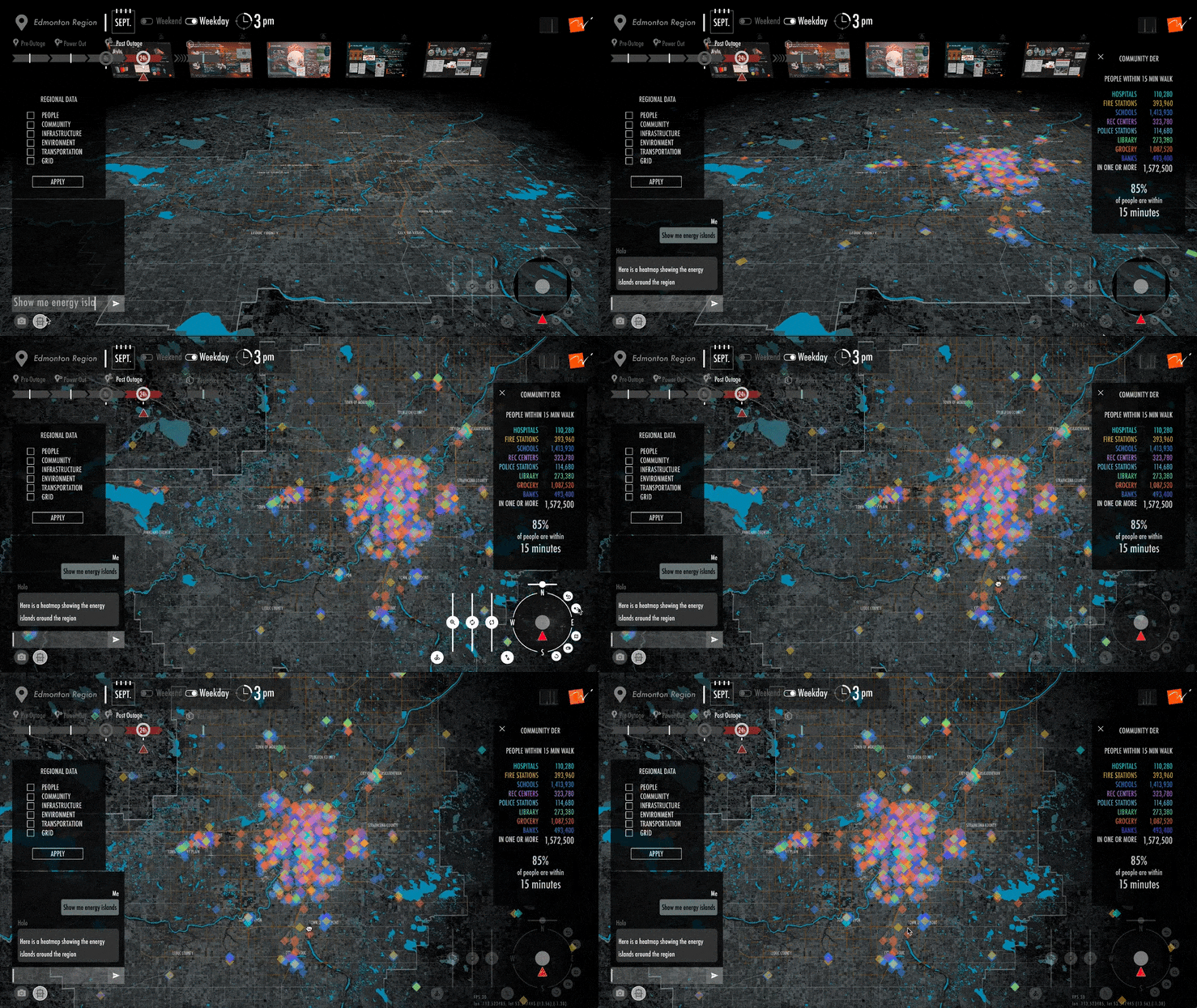
RWI’s Synthetic Earth is available as a standalone application through RWI’s Holodeck Platform, which has interactive interfaces for navigation. Visualized data, analytics, time and configurable context will be accessible to RWI’s clients, which include industry, government, critical infrastructure, health, development, planners, research institutions, and non-profits.
More applications are consistently being introduced, but at present, massive swaths of the continental north of the Americas have been synthesized: a total of 3.5 million km²s, five times the size of Texas!
We continue to radically minimize the computing, energy, cooling and storage requirements of our platform, tools and technologies. While another AI system might require three bottles of water, comparable results from our Synthetic Twin technology require less than a single drop.

We achieve this through our own scalable, efficient clustered computing platform combined with a proprietary modelling language known as Synthetic Notation Language (SNL). RWI Synthetics can use SNL to quickly build and iterate on models independently, while our custom compute platform can be optimized and refined over time to run models as efficiently as possible.
In short, we can be so efficient in synthesizing our entire planet because we’re not wasting any additional resources on anything extraneous. We create the right tool for a specific job, task, or goal, and that lets us be highly efficient, which is why Synthetic Earth uses a fraction of the power compared to other general-purpose generative or agentic AI systems.