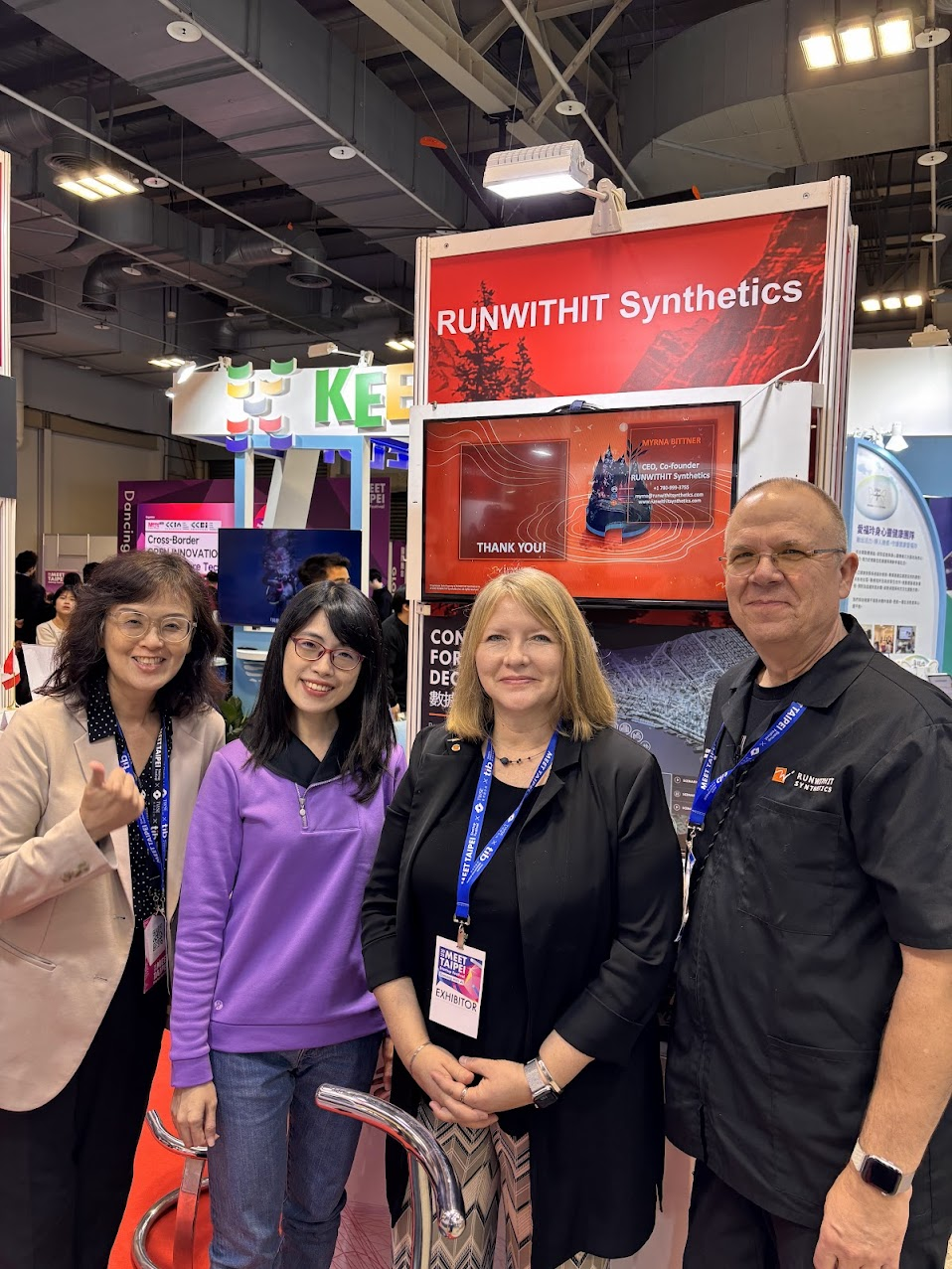
RWI Empowering Indigenous Innovation in Taiwan

RWI’s recent trip to Taiwan demonstrated how our high-fidelity, people-centred Synthetic Models are uniquely engineered to simulate these interconnected systems and deliver actionable insights for governments, planners, and industries.
A week’s worth of discussions, presentations, and partnerships helped advance the future of RWI’s augmented intelligence platform in Taiwan and established a new era of global Indigenous collaboration.
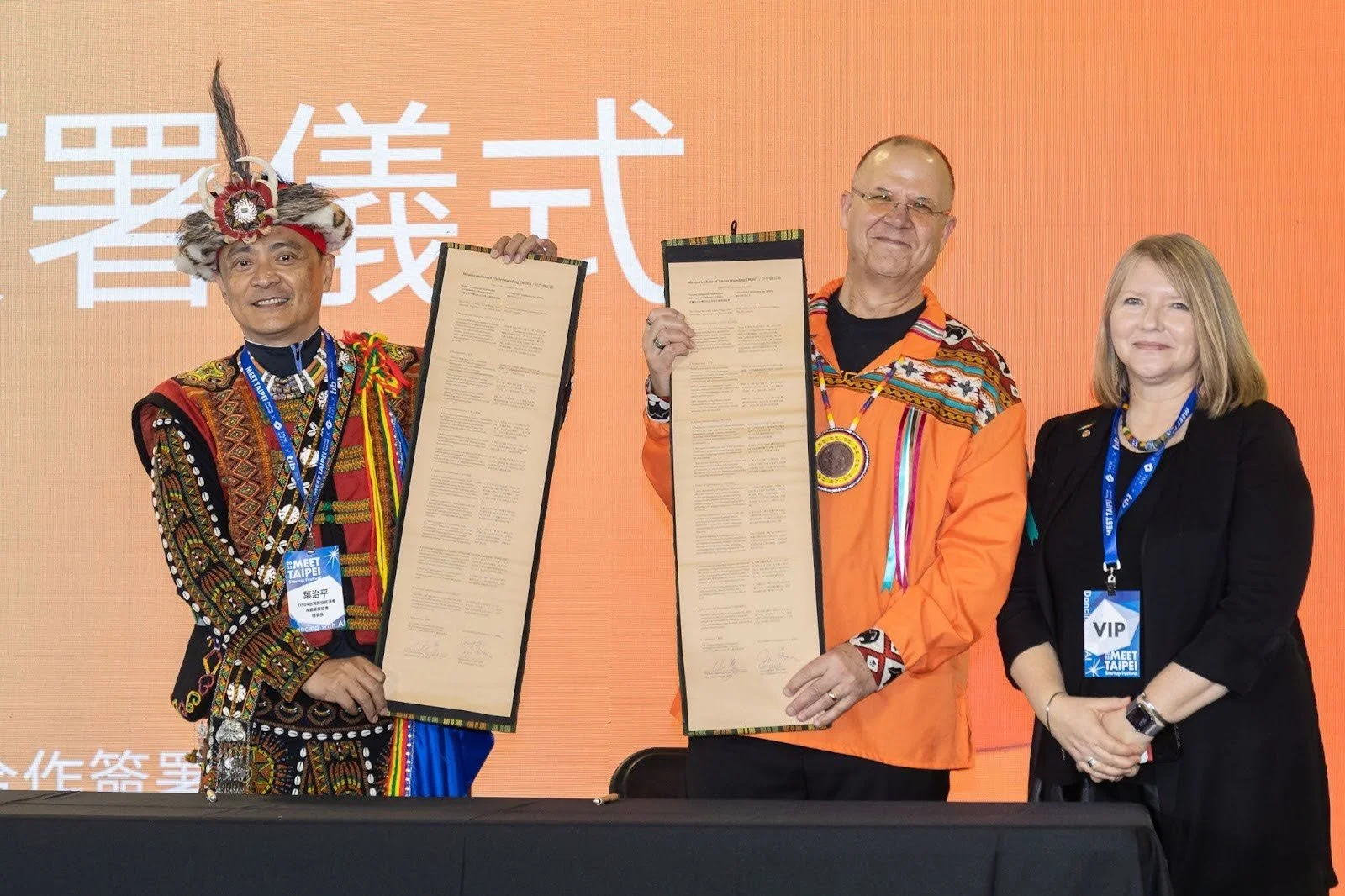
Signing a Historic Agreement
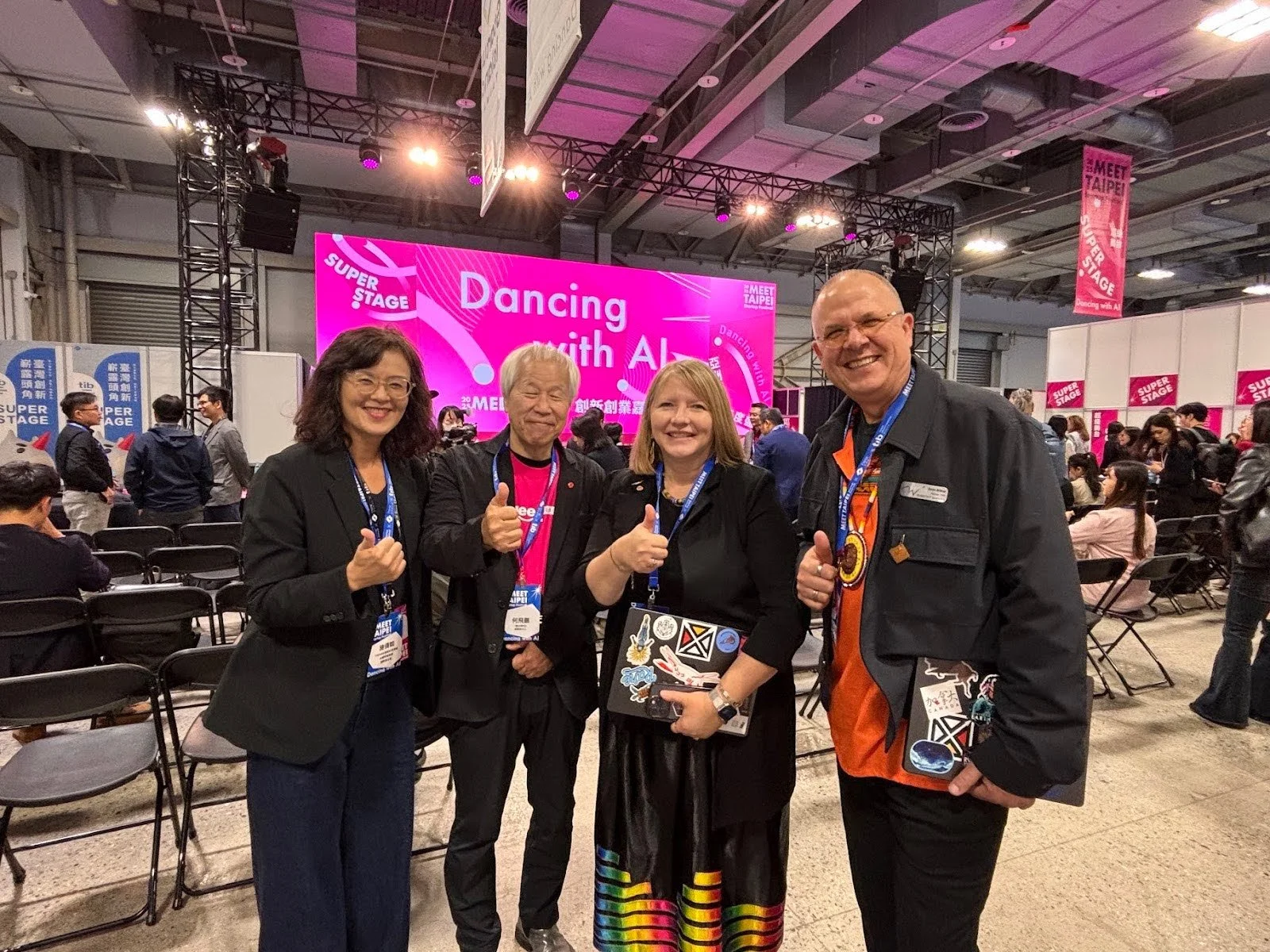
RWI and the Taiwan Indigenous Sustainable Development Association (TISDA) signed a Memorandum of Understanding (MOU) on Nov. 20 on the main stage at Meet Taipei, Taiwan’s premier innovation and startup event.
Facilitated by the Indigenous Peoples Economic and Trade Cooperation Arrangement (IPETCA), this agreement marks Taiwan’s first Indigenous-led technology partnership under that arrangement. It marks a new era of global collaboration in Indigenous technology, culture, disaster resilience, and sustainable development.
Not only is this a significant event representing global progress of our internationally recognized Indigenous Tech and collaboration between Indigenous Peoples, but it’s also a significant milestone for the worldwide adoption of AI for good and the applicability of Synthetic Twins across the planet.
It’s been an honour to connect with leaders from government, investment, engineering, renewable energy and more during our visit.
Together with our new partners in TISDA, RWI is advancing efforts to address some of the most pressing, complex challenges facing Taiwan and its Indigenous populations, ensuring no one is left behind.
Sharing Innovative Perspectives
RWI’s Co-Founders met with representatives from TECO Electric & Machinery Co., Ltd, a major business group spanning heavy electric equipment, green energy, electromechanical engineering, information technology, communications, and various other diverse fields, with a business scope covering over 40 countries across five major continents.
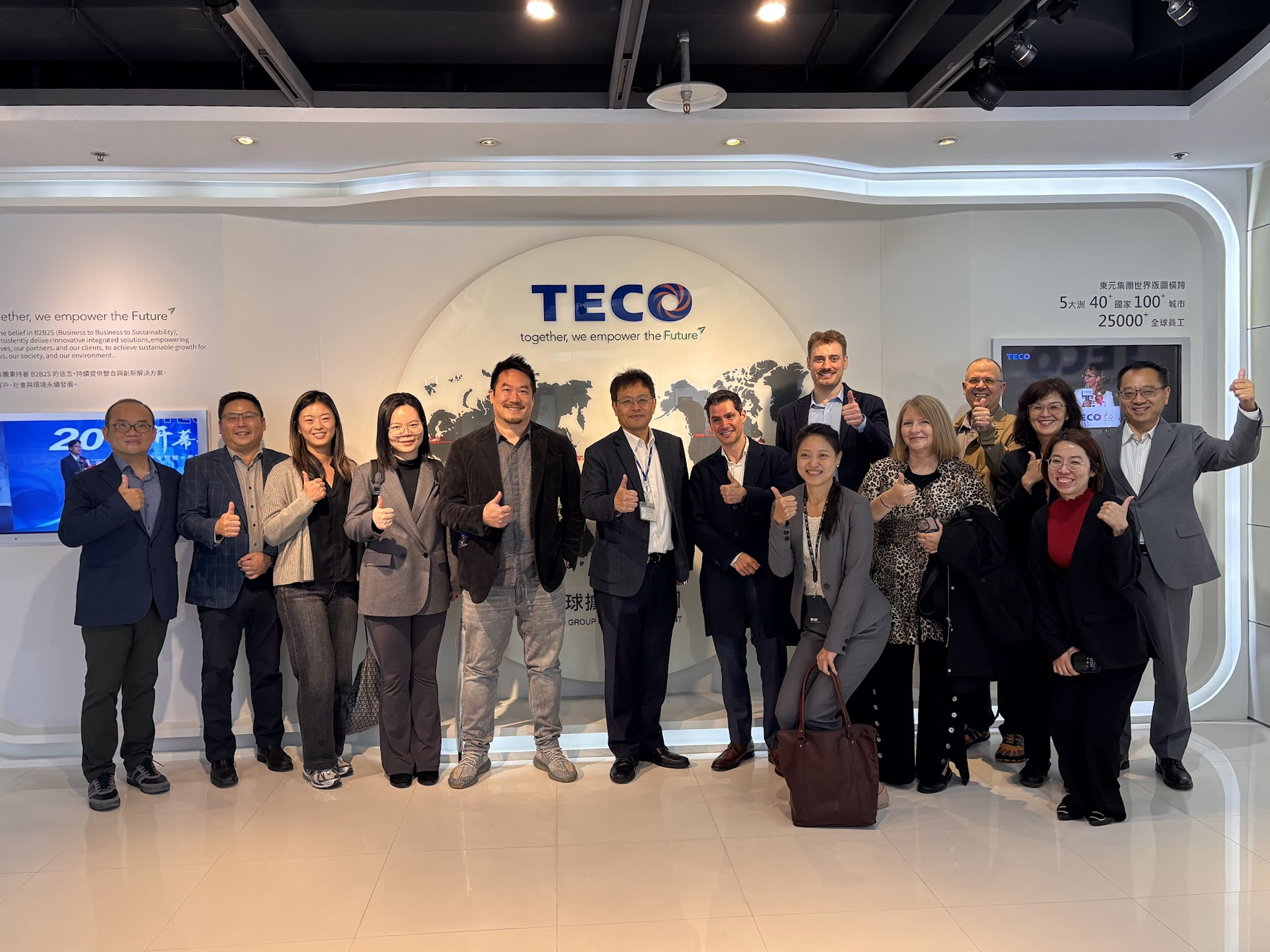
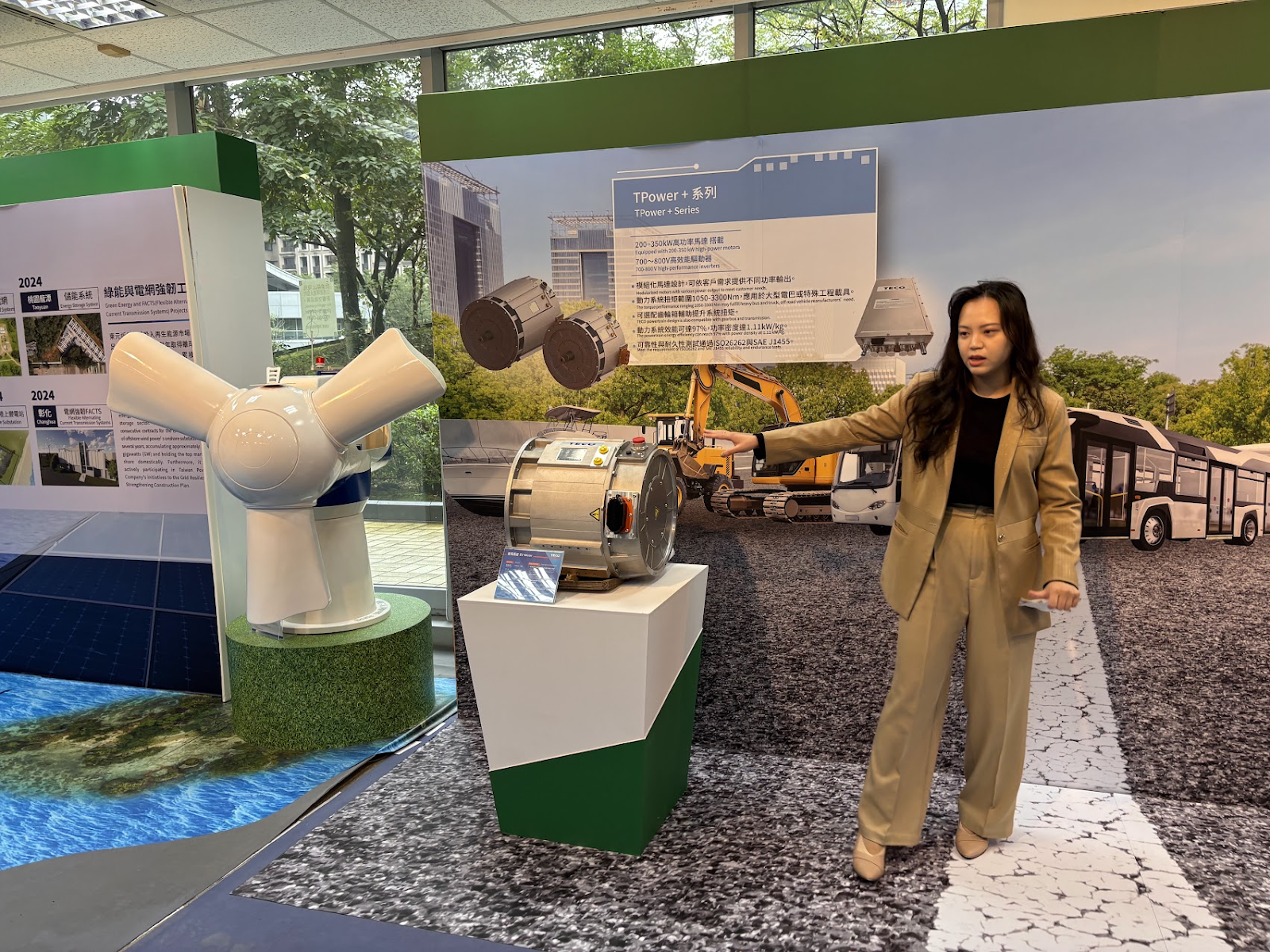
TECO shared perspectives on motors, power equipment, industrial appliances, and energy solutions, providing us with valuable insight into Taiwan’s priorities in energy, infrastructure, and innovation.
Showcasing Digital Ecosystems
The visit to Advantech's Taipei HQ showcased their decisive role in digital transformation through Edge AI computing platforms and IoT appliance stacks. Advantech is accelerating planning by deploying a modular Edge AI ecosystem with a ready-to-use Container Catalog across industrial and smart city applications. Their impact is evident in smart healthcare, where the iWard 4.0 system uses LLMs (Large Language Models) to automate clinical documentation, and the iVideOR platform integrates smart operating room video management.
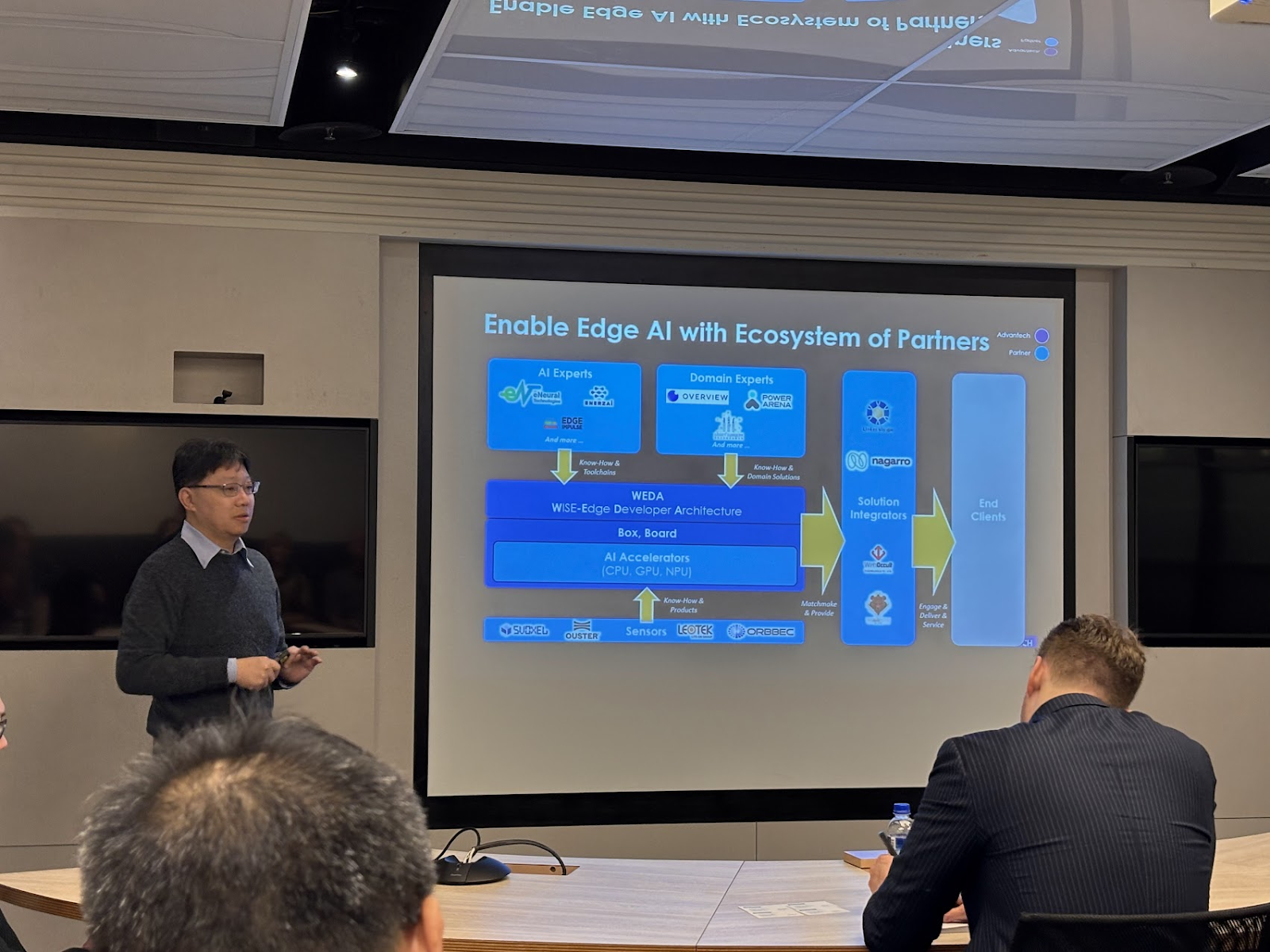
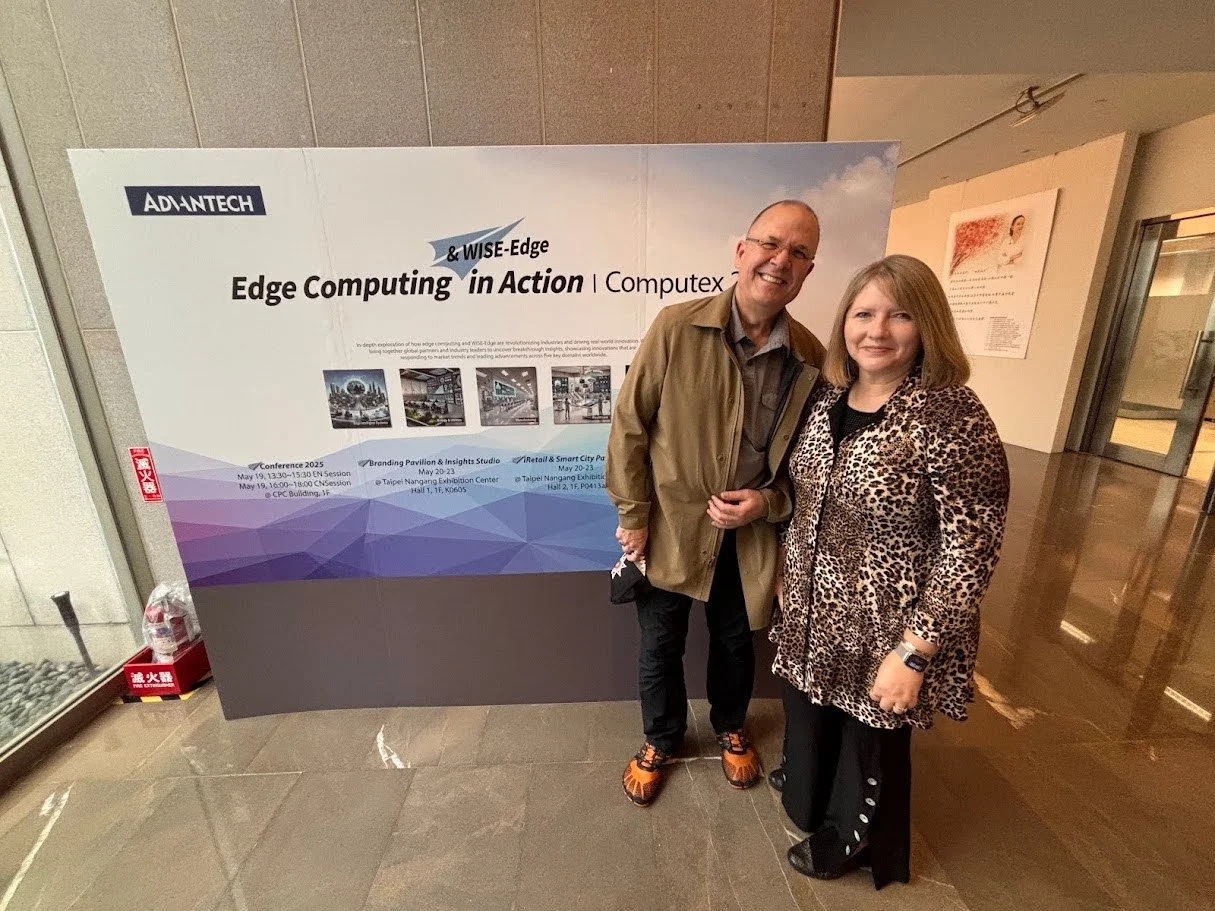
By providing this robust intelligence at the edge, Advantech directly enables the development of high-fidelity digital twins and synthetic-population modeling, making strategic planning faster and more data-driven.
Demonstrating Global Thought Leadership
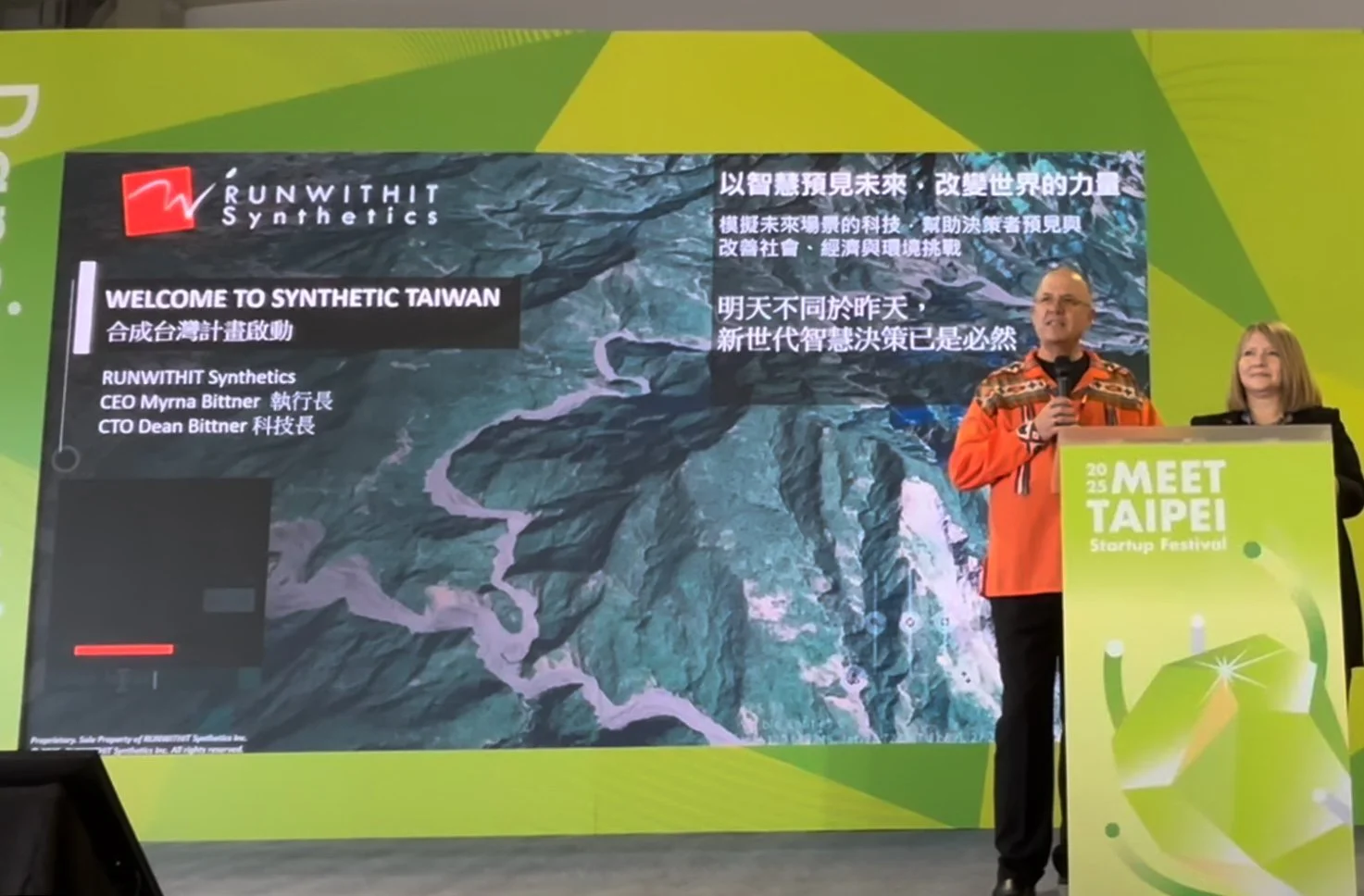
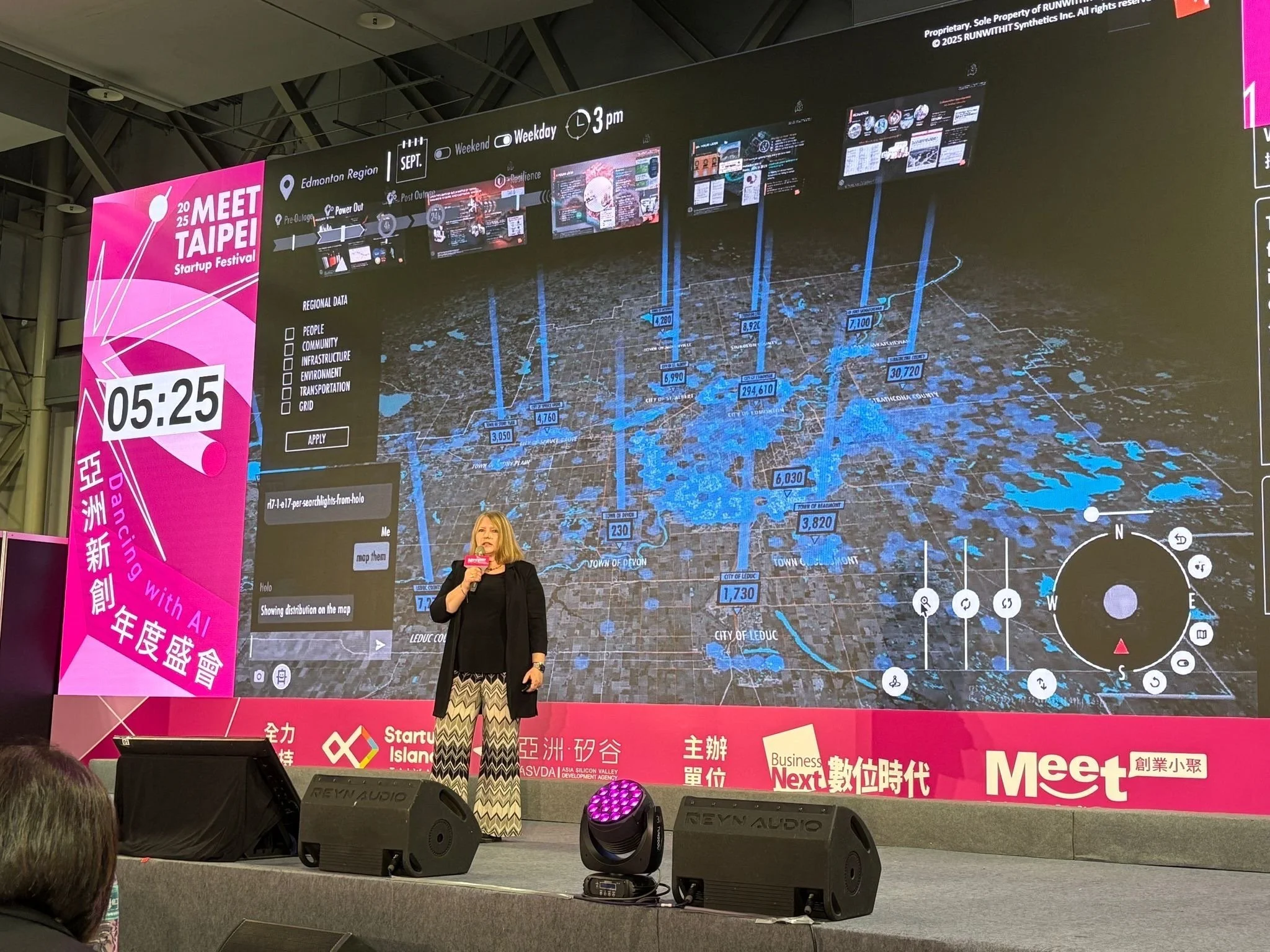
At Meet Taipei’s Neo Star Stage, RWI CEO Myrna Bittner captivated audiences with a look into Synthetic Taiwan and our global leadership in high-fidelity, augmented intelligence ecosystems.
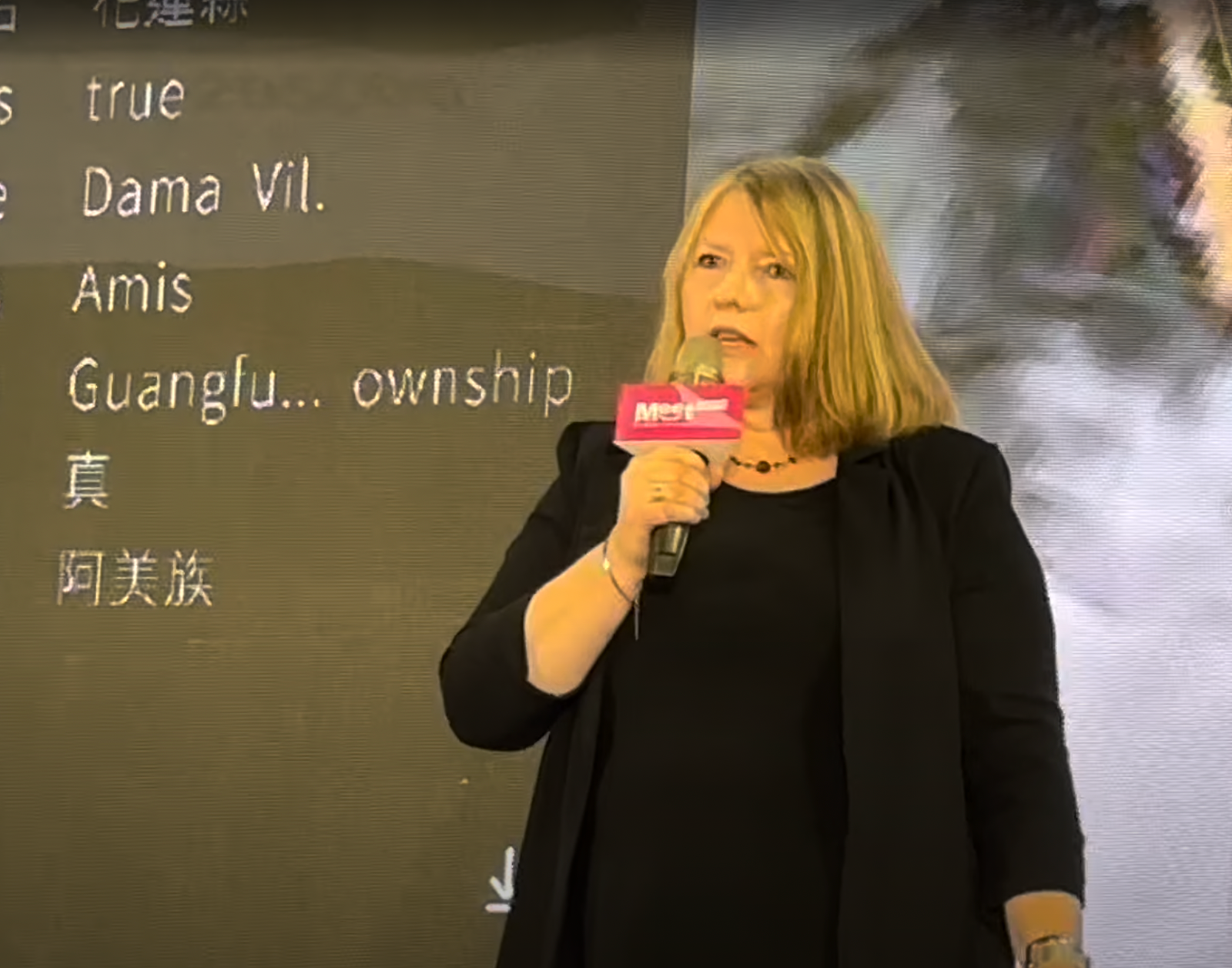
As Taiwan confronts climate risks, demographic shifts, and rapid urbanization, RWI’s 6D Synthetic Earth platform offers a powerful way to simulate these overlapping pressures and guide smarter, faster decision-making.
Taiwan is ready for next-generation futures modelling, and RWI is honoured to drive this leap forward.
A Visit to Sandimen Township
Near the end of our trip, RWI travelled south to Sandimen (山地門) Township in Pingtung to see the post-typhoon damage firsthand.
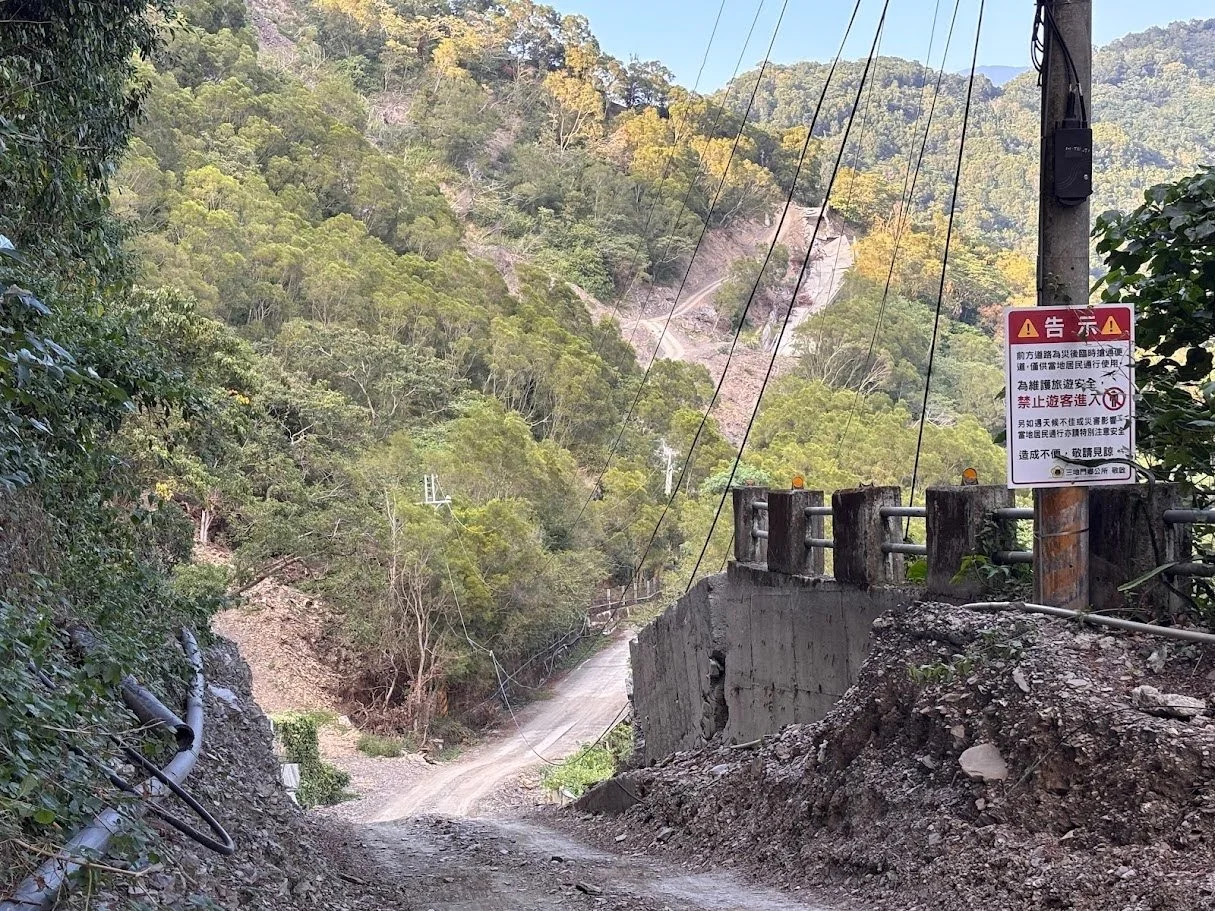
The scene was striking: collapsed slopes, fractured roads, and communities cut off by landslide debris. Standing at the edge of disrupted routes conveyed how quickly a single climate event can reshape mobility, isolate villages, and simultaneously affect tourism, livelihoods, and safety.

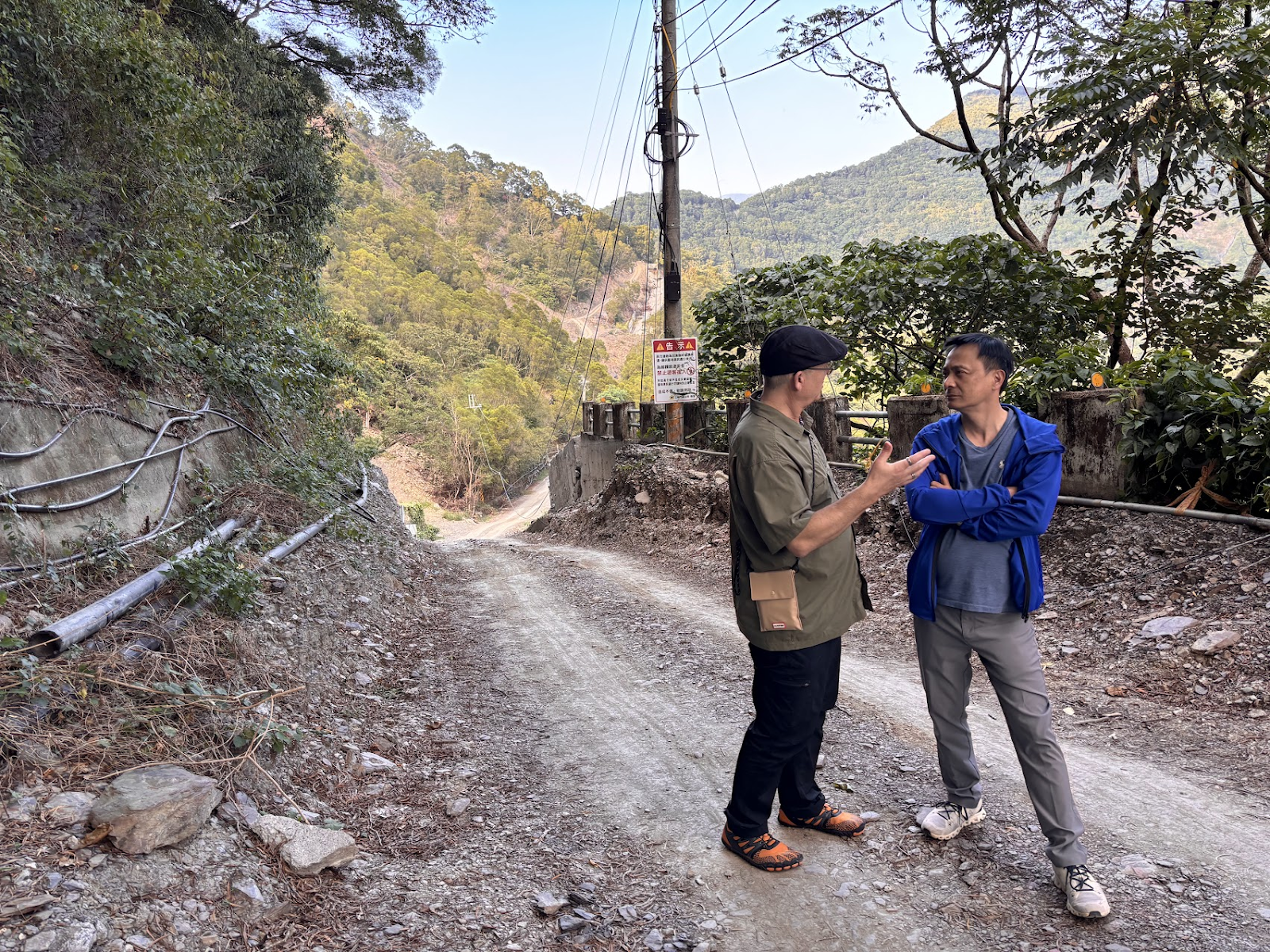
Walking the damaged segments and speaking with local leaders gave us a deeper understanding of the cascading challenges faced by Indigenous communities, affirming that people-centred models are vital tools that provide communities with the insights they need to prepare, recover, and rebuild with clarity.
Building Better Futures
It’s been an honour to connect with leaders from government, investment, engineering, renewable energy and more during our visit.
As Taiwan navigates aging demographics, climate-driven disruptions, and rural-urban health disparities, our people-centred synthetic modelling is essential for decision-makers to augment their intelligence for intersecting impacts, sustainable development, and resilience-building.